
About Engram
Today’s AI models don’t understand what you do. Not really. Everything models know comes from their training – and they’re trained mostly on the public internet. They’re knowledgeable about popular Github repos and things people write in articles online. But what you spend your time thinking about every day is so much more than that. You know what good work looks like. You know where a specific project is going, and where you want it to be in a year. You know everything – from the small details, to the big picture of how life and work fit together – knowledge that goes far beyond any chat window. And when you do write things down, important ideas scatter across a sprawl of documents and files. When you use a model, it reads and re-reads many documents from your company before it can even get started. But as we all know by now, this paradigm isn’t perfect: as our contexts grow, models become more expensive and more confused. Individual users already generate far too much data for a model to process. And reading is shallow and temporary; even when the model does see your context, it forgets everything the moment you close the chat. Right now, models do not learn from this data. This means they can’t automatically get better at the things you use them for. We want to change this by building models that learn from your context. Ours is a fundamentally different bet from other labs. Instead of spending massive amounts of training compute on public data, we start from strong pre-trained models and spend training compute on the context you care about. Each model spends the equivalent of hundreds of years studying your context: piecing things together, drawing connections that have never been drawn, finding errors that went unnoticed.
Open positions (2)
Company details
Funding
Total raised
$98M
Last stage
Seed
Investors
Founders
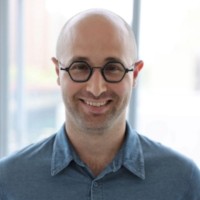
Dan Biderman
PhD in computational neuroscience from Columbia University; postdoctoral researcher at Stanford AI lab under Chris Ré. Israeli researcher building AI memory technology.
LinkedInSabri Eyuboglu
Stanford PhD; created Cartridges, a method for converting large collections of documents into reusable AI memory.
Chris Ré
Stanford professor of machine learning; postdoctoral advisor to Dan Biderman.
What happens next.
No applications, no recruiter spam. Just the intro.
Confirm the fit
A few questions to make sure this role is the right shape for you. Two minutes.
I pitch you to the company
I write the intro, send it to the founder, and handle the back-and-forth.
A meeting lands on your calendar
If they’re a yes, I book the chat. You show up — that’s the whole job-hunt.