

About the role
One Robot builds task-specific world models and an evaluation platform for robot manipulation policies.
Training end-to-end policies for robots is vibes-based today. Teams collect data, train, deploy on a real robot, find out what fails, collect more, retry. We replace the trial-and-error with rigorous validation that tells you where your policy will fail and what data to collect to fix it.
Robotics can't industrialize without an evaluation layer. We're building it.
We're solving challenging technical problems around long-horizon autoregressive generation, world model controllability, and closing the sim-to-real gap. We work with real customer data, real failures, and real deployment pressure.
We're based in San Francisco, backed by Accel, YC, several exited founders, and engineering leaders at leading AI companies.
We're small and deliberately so. Everyone is an IC with deep ownership of a wide surface area. The culture is fast iteration and direct responsibility.
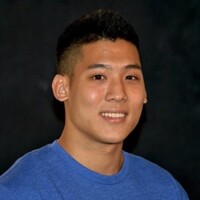
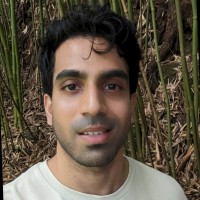
Hemanth Sarabu and Elton Shon co-founded One Robot after leading robot learning together at Industrial Next (YC W22), bringing experience from Google, NASA JPL, and Tesla.
We're expanding the platform into policy training — building the components that let policies validate and improve through our world model. You'll train manipulation policies — VLAs, end-to-end imitation, RL — and push the world model and eval forward.
What you'll do:
- Train manipulation policies: Build VLAs, diffusion policies, or end-to-end imitation models and run them on real robots.
- Validate the world model end-to-end: Train policies in simulation, deploy on real hardware, and find what doesn't transfer.
- Push policy capabilities forward: Build the infrastructure that lets policies train and improve on our platform.
Requirements:
- Very strong coding in Python and PyTorch.
- Real-robot policy training: Track record training manipulation policies that ran on physical hardware.
- Demonstration data: Hands-on experience curating real-robot demonstration datasets.
About One Robot
World models for robot evals and training.
Other roles at One Robot
Job details
Salary
$150,000 - $275,000
Equity
0.1% - 2%
Location
San Francisco, CA
Experience
0+ years
Funding
Total raised
$500K
Last stage
Seed
Investors
What happens next.
No applications, no recruiter spam. Just the intro.
Confirm the fit
A few questions to make sure this role is the right shape for you. Two minutes.
I pitch you to the company
I write the intro, send it to the founder, and handle the back-and-forth.
A meeting lands on your calendar
If they’re a yes, I book the chat. You show up — that’s the whole job-hunt.